General Data Protection Regulation (GDPR)
Mythri Sanna
What is GDPR?
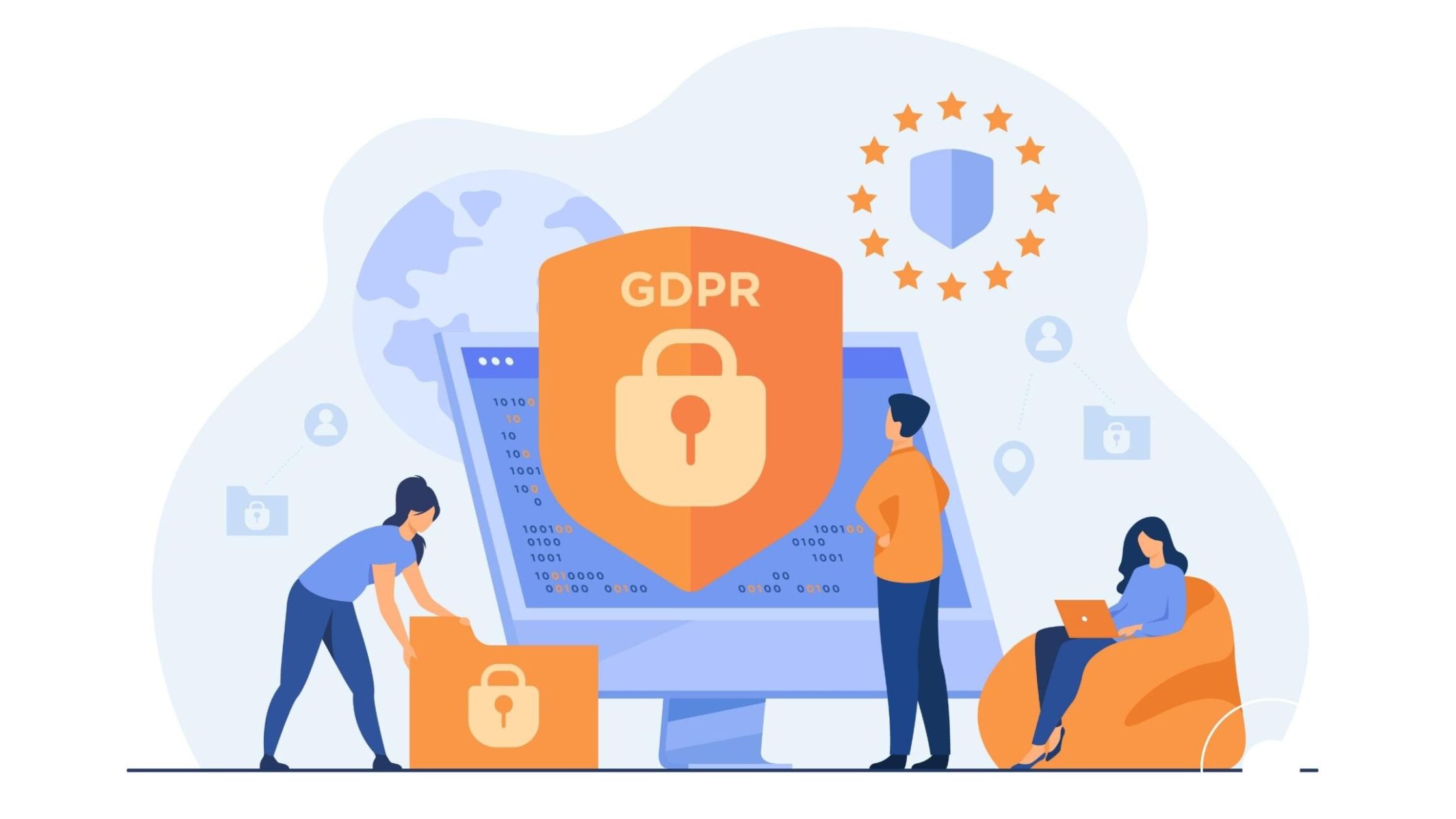
GDPR stands for the General Data Protection Regulation. The GDPR is a set of rules and regulations that were implemented on 25-May-2018. These regulations are applied to any organisation inside or outside of the EU that stores or processes any data belonging to EU citizens.
Privacy by Design and Privacy by Default







Who does GDPR apply to?



Who is the Data Protection Officer?
Under GDPR, companies processing certain kinds of data must appoint a Data Protection Officer (DPO), a named individual who is accountable and responsible by law for an organization’s privacy compliance, including PbD. This requirement is regardless of a company’s size, which means that even the tiniest business engaged in certain kinds of data processing must appoint a DPO.
It is encouraged to voluntarily appoint a DPO regardless of the nature of their work. DPO acts as the health and safety officer for privacy. DPO acts as the “good cop” to keep the development processes legally compliant and acts as the “bad cop” if the practices slip.
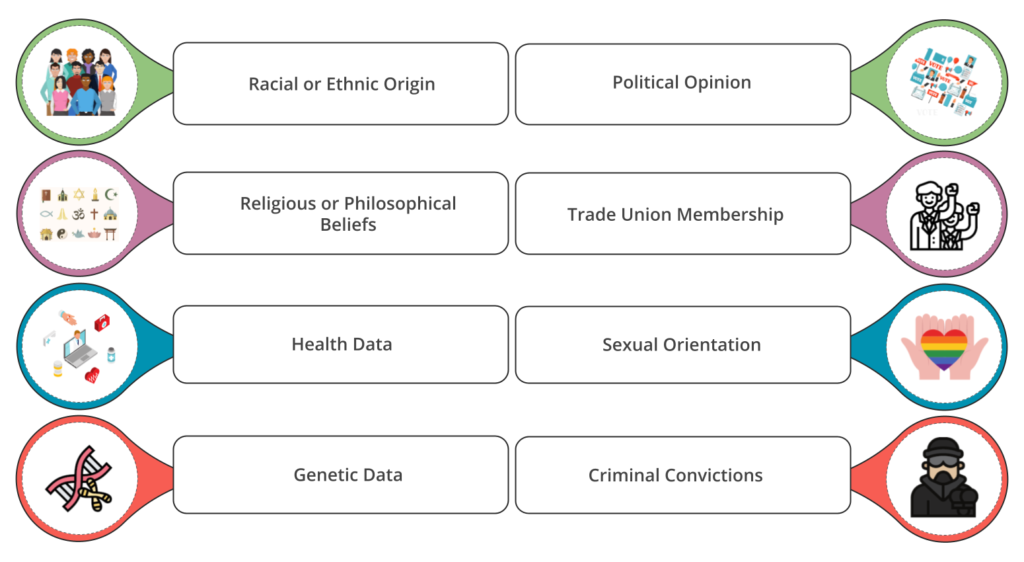
What is personal data according to GDPR?
Privacy by Design - Compliance for App
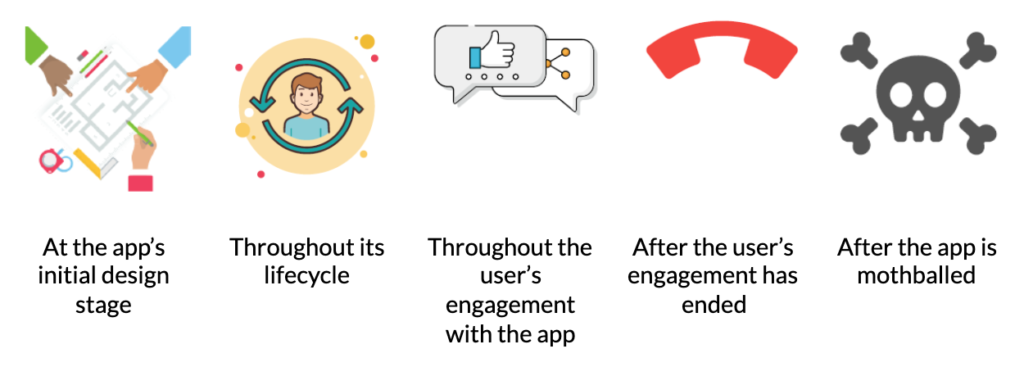
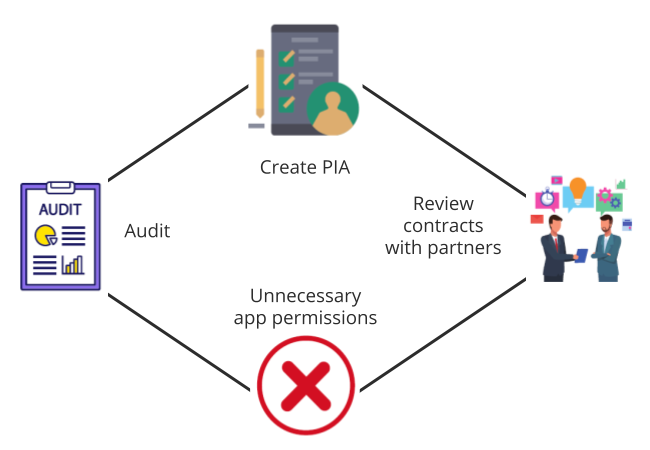
Privacy by design at app’s initial design stage
- Create a privacy-impact assessment (PIA) template for your business to use for all functions involving personal data.
- Review contracts with partners and third parties to ensure the data you pass on to them is being processed in accordance with PbD GDPR.
- Do not request unnecessary app permissions that imply privacy invasion, such as access to contacts or to the microphone.
- Audit the security of your systems.
Privacy by Design throughout its lifecycle
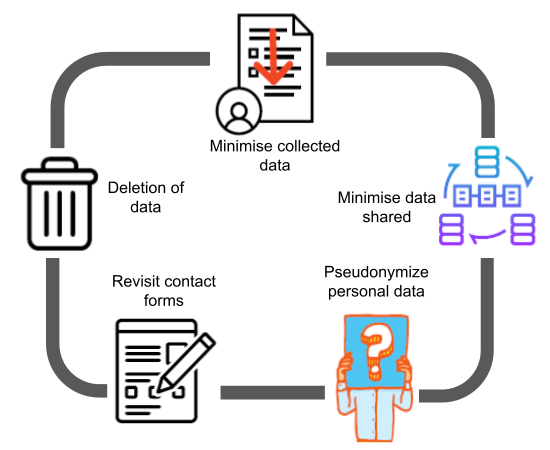
- Minimise the amount of collected data.
- Minimise the amount of data shared with third parties.
- Where possible, pseudonymize personal data.
- Revisit contact forms, sign-up pages and customer-service entry points.
- Enable the regular deletion of data created through these processes.
Privacy by Design throughout the user’s engagement with the app
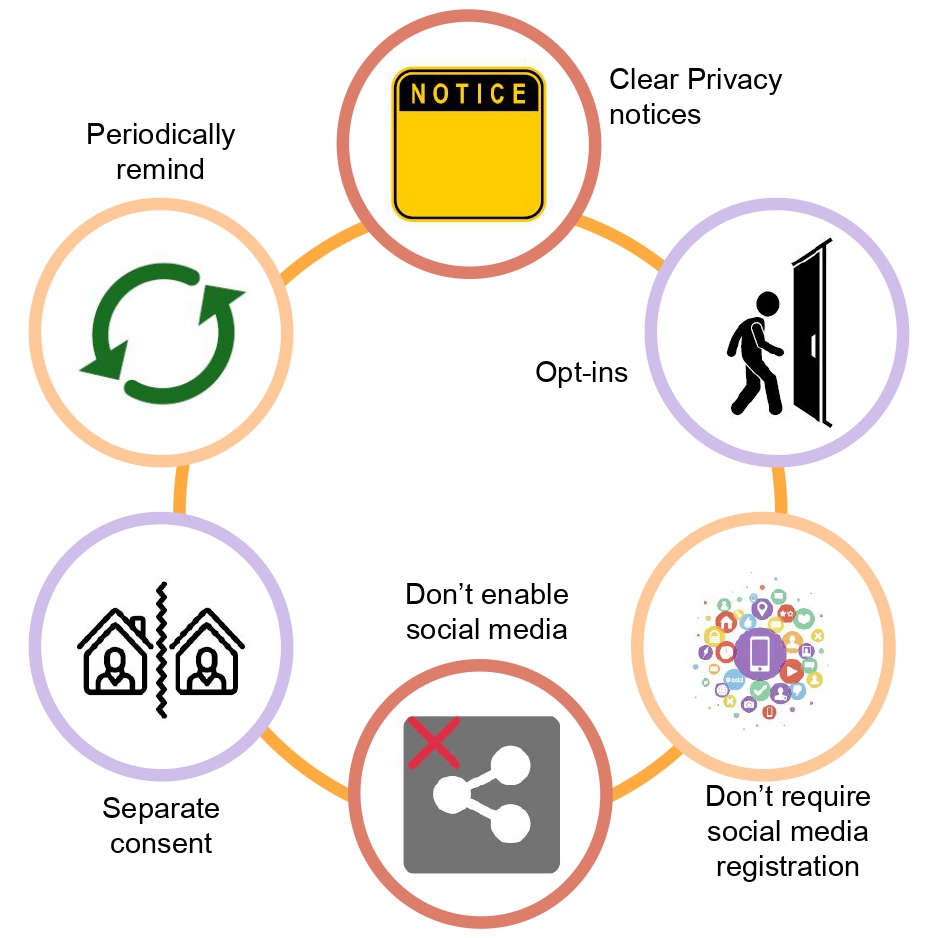
- Provide clear privacy and data-sharing notices.
- Embed granular opt-ins throughout those notices.
- Don’t require social media registration to access the app.
- Don’t enable social media sharing by default.
- Separate “consent for essential third-party data sharing” from “consent for analytics and advertising”.
- Periodically remind users to review and refresh their privacy settings.
Privacy by Design after the end of engagement and mothballing
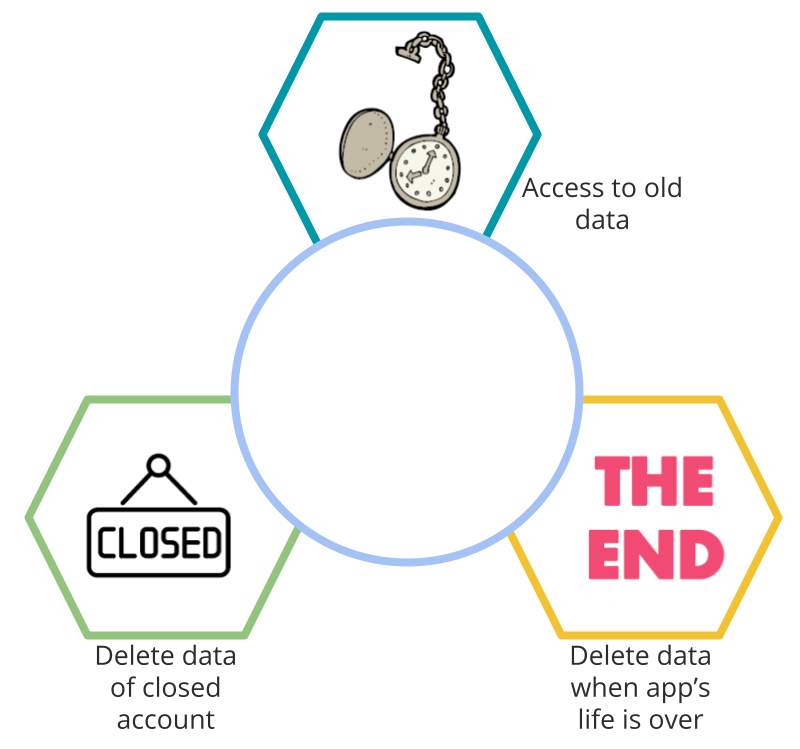
- Allow users to download and delete old data.
- Delete the data of users who have closed their accounts.
- Delete all user data when the app’s life comes to an end
Privacy impact assessment
Doing a PIA

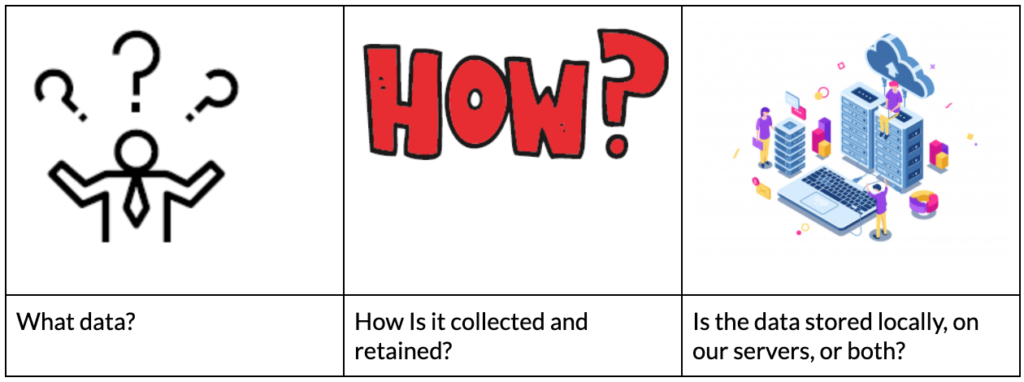
Identify the source and type of information gathered. Who collected the information, the method and for what purpose?
How and when will the information be used?
Does the person have authorization?
How will authorized users be identified?

How and when will the information be used?
Does the person have authorization?
How will authorized users be identified?



PIA - data collection - details
- For how long is data stored, and when is the data deleted?
- Is the data collection and processing specified, explicit, and legitimate?
- What is the process for granting consent for the data processing?
- Is consent explicit and verifiable?
- If not based on consent, what is the legal basis for the data processing?
- Is the data minimised to what is explicitly required?
- Is the data accurate and kept up to date?
- How are users informed about the data processing?
- What controls do users have over the data collection and retention?
PIA - technical and security measures
- Is the data encrypted?
- Is the data anonymized or pseudonymized?
- Is the data backed up?
- What are the technical and security measures at the host location?
PIA - Personnel

- Who has access to the data?
- What data protection training have those individuals received?
- What security measures do those individuals work with?
- What data breach notification and alert procedures are in place?
- What procedures are in place for government requests?
PIA - Legal

- Are the obligations of all data processors, including subcontractors, covered by a contract?
- If the data is transferred outside the European Union, what are the protective measures and safeguards?
PIA - risks

- What are the risks to the data subjects if the data is misused, mis-accessed, or breached?
- What are the risks to the data subjects if the data is modified?
- What are the risks to the data subjects if the data is lost?
- What are the main sources of risk?
- What steps have been taken to mitigate those risks?
Security measures to be taken.
- Password hashing and salting
- Data sandboxing
- Pseudonymization and anonymization
- Encryption at rest and in transit
- Responsible disclosure
- Staff training and accountability on data protection
- Physical security of servers, systems and storage
Development
- GDPR does not define a list of right or wrong programming languages, version control systems, or testing tools.
- Whatever is used should be clearly defined and followed for each and every situation.
- Standard tools and infrastructure can be modified at any time, as long as they are documented as the frameworks which must be used.
Coding standards
- Create a list of approved standards and methodologies used for both coding and testing.
- Disable unsafe or unnecessary modules, particularly in APIs and third-party libraries.
- An audit of what constitutes an unsafe module should be about privacy by design, such as the unnecessary capture and retention of personal data, as well as security vulnerabilities.
- Code reviews should include an audit for privacy by design principles, including mapping where data is physically and virtually stored, and how that data is protected, encrypted, and sandboxed.
Data management
- Collect the absolute minimum amount of personal data required – on the front end and back end.
- Do not link personal data with other data sets stored in a single location.
- If aggregating data, remove personal and identifying data as much as possible.
- Anonymisation, though not explicitly required, is recommended; however, the greater the risk that anonymized data could be indirectly identifiable or re-identified by aggregating it with additional data, the enhancing the risk of using it at all.
- Data retention and deletion schedules are to be planned.
- Data should be deleted, either automatically or through user actions, when it is no longer needed.
- Should be deleted from the main systems.
- Should be deleted from archives and backups.
- Should be removed from third parties to whom it is passed.
- Not everything has to be deleted as a rule.
- Ex: Keep all purchasing records for ten years for tax and auditing purposes Document that fact and its rationale.
- User’s request for account deletion would not require you to delete their purchasing records from your tax and accounting records; the right to be forgotten is not the right to fly under the radar.
- Personal data should not be visible in plain view, either on the front or back end.
- All users of a system should not have universal access.
- Data should also be encrypted in transit and at rest.
- Design reviews should view flows of personal data through the eyes of an attacker, be it human or otherwise.
Consent

- Users have the right to be informed about the data flows containing their information, and their rights over them, in the most privacy-positive ways possible.
- Provide good consent mechanisms and user controls.
- Can be done in control panels, user dashboards, account settings, and privacy centers.
- Consent choices must be granular.
- Users must be able to invoke any aspect of control over their data at any time.
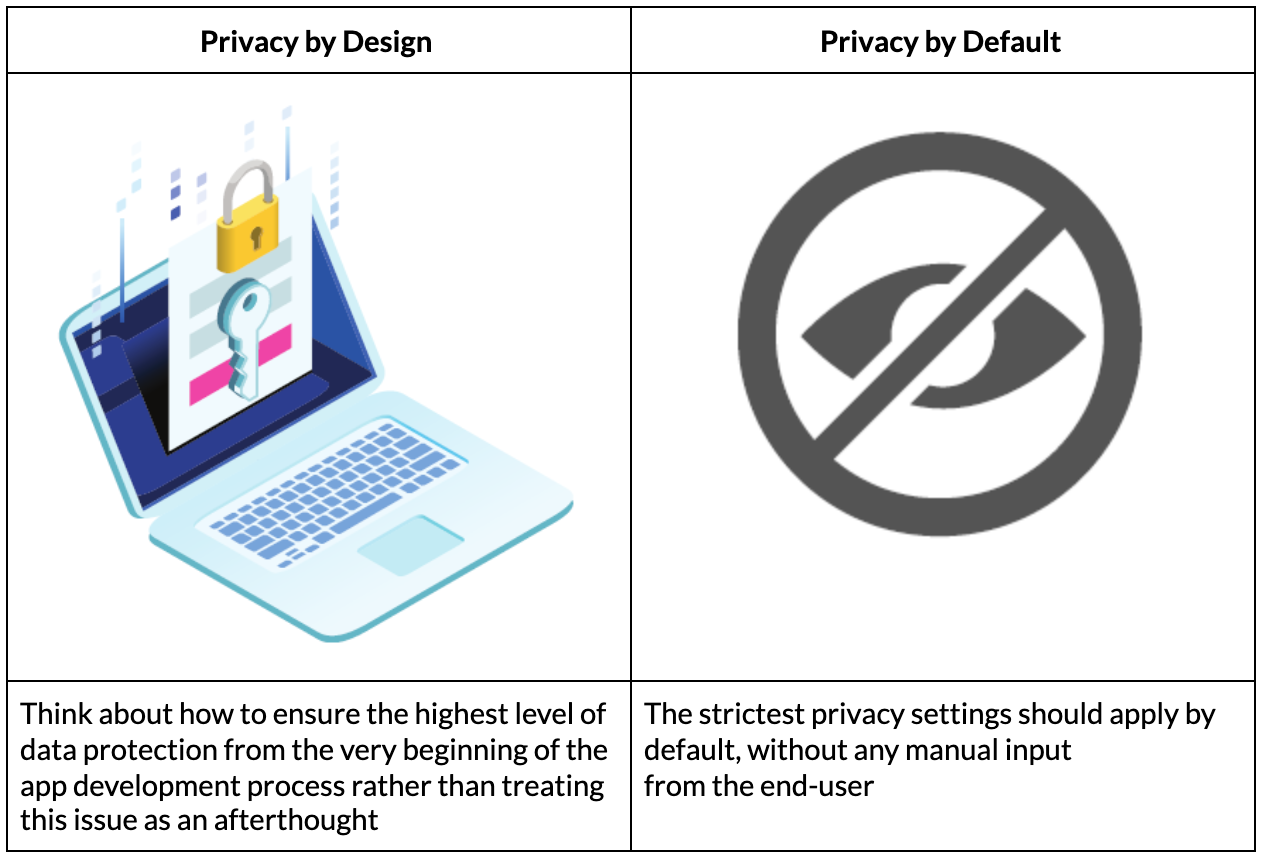
- A user setting up an account for the first time should enjoy optimal privacy settings by default.
- They should not have to opt-in to privacy, or switch off defaults to achieve it.
- Consent must never be assumed through a lack of action – develop ways to alert users to the fact that they have not yet granted opt-in consent to any applicable choices and options:
- Failure to tick a box.
- Mere creation of an account.
- Back-end development process will also need to ensure timestamped documentation of:
- What consent a user gave?
- How they gave it?
- Whether or not they have withdrawn it.
Access

- Provide an interface for individual access rights:
- Right to edit and correct information.
- Right to download data.
- Right to restrict processing.
- Right to data deletion.
Testing

- Add privacy by design and data protection by default to the testing processes.
- Penetration testing should be planned by default.
- Privacy testing procedures should predict the ways unauthorized users would access actual data on your system.
- Would a suspicious search for user data, alteration to a record be logged as a security vulnerability?
- Is data stored in login cookies?
- Could someone gain access to data by intentionally triggering an error?
- Can users have plaintext or silly passwords?
- If you are applying privacy by design retroactively to an existing project, have you tested how easy it is to access legacy data?
- Testing for data protection should also consider external alerts.
- Public should have an option to alert you to data breaches, either potential or real.
- Golden rule of GDPR — document it, or it didn’t happen. Test results, methodologies used to achieve them, need to be noted and actioned as living documents.
Privacy Information Notice - provided to end users
- What data are you collecting?
- Why are you collecting it, and is that reasoning legally justifiable?
- Which third parties are you sharing it with?
- What third-party data are you aggregating it with?
- Where are you getting that information from?
- How long are you keeping it?
- How can the user invoke their rights?
- How can the user invoke their rights?
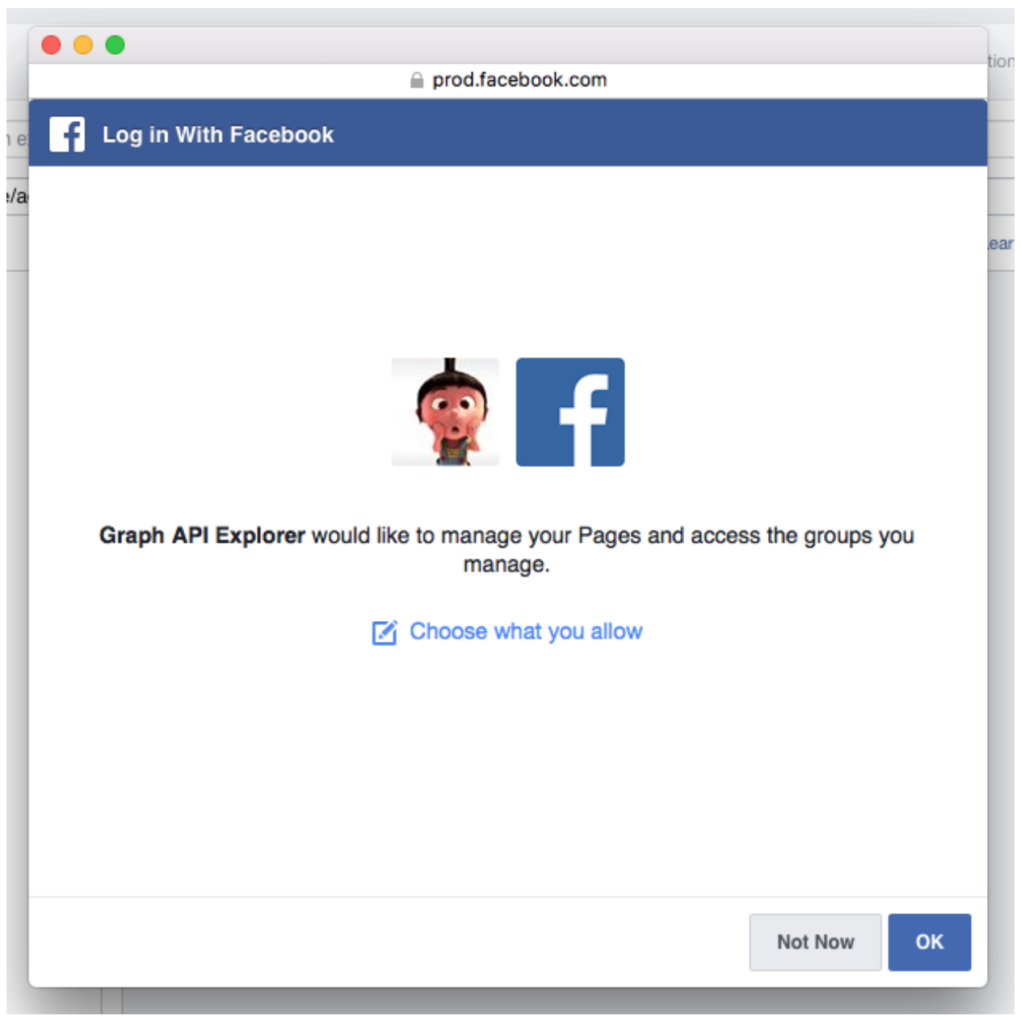
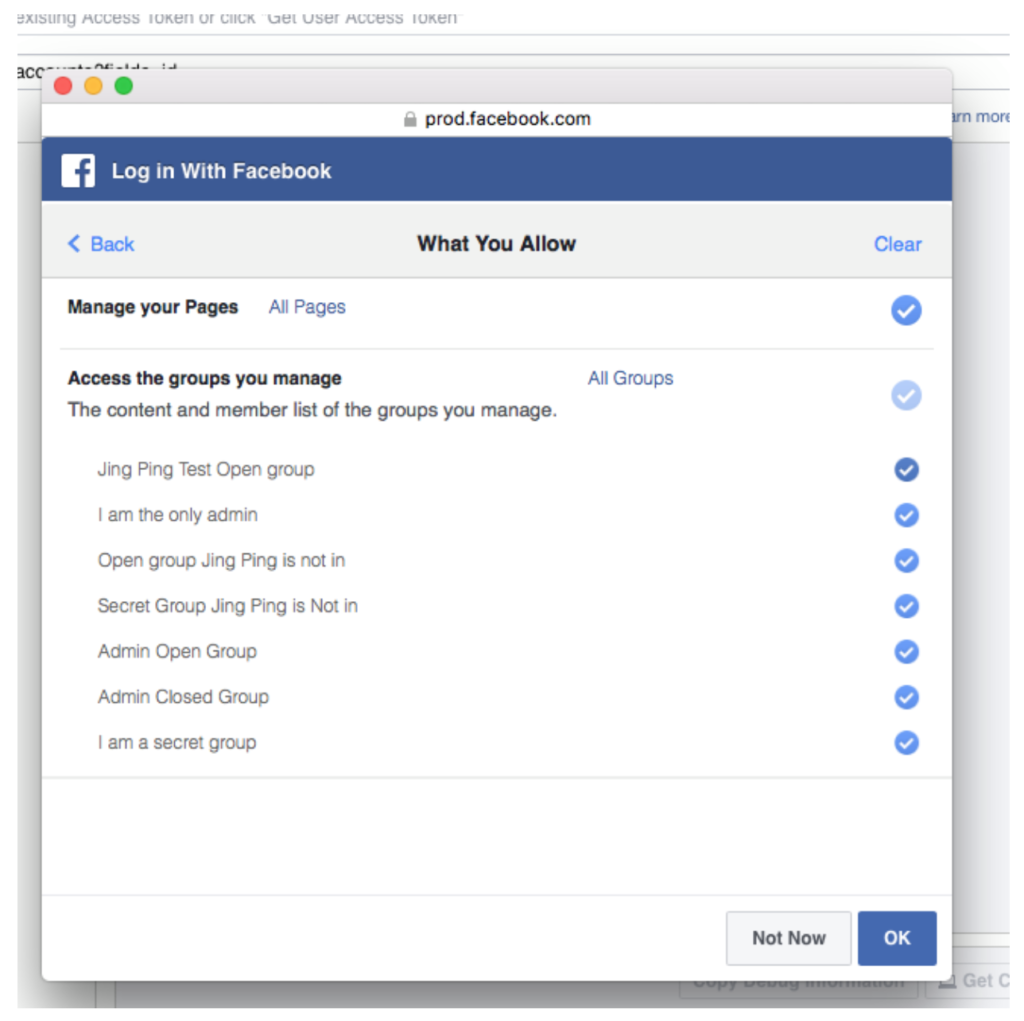
Example: Granular permissions – Facebook
Users can choose which permissions they grant through a permission request flow. For example, if an app requests “Page and Groups” permission, people receive a request to grant those permissions.
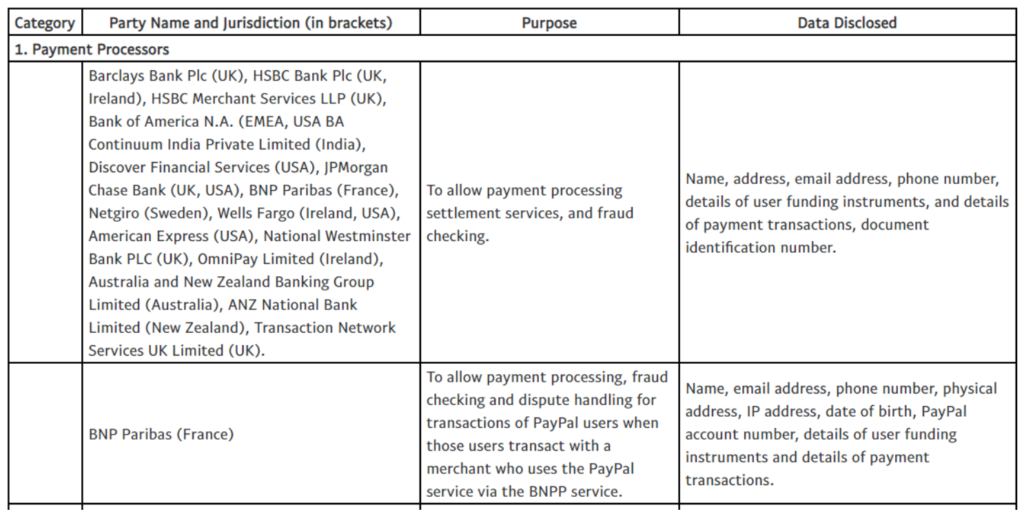
Example: List of 3rd Parties – Paypal
PayPal’s notice lists over 600 third-party service providers – https://www.paypal.com/uk/webapps/mpp/ua/third-parties-list
Contact us to find out how Techpearl can develop the best apps according to your requirements adhering to the General Data Protection Regulations.